Latest / Story
Your ATO Sensors Need Patching Too: The FortiSIEM Lesson
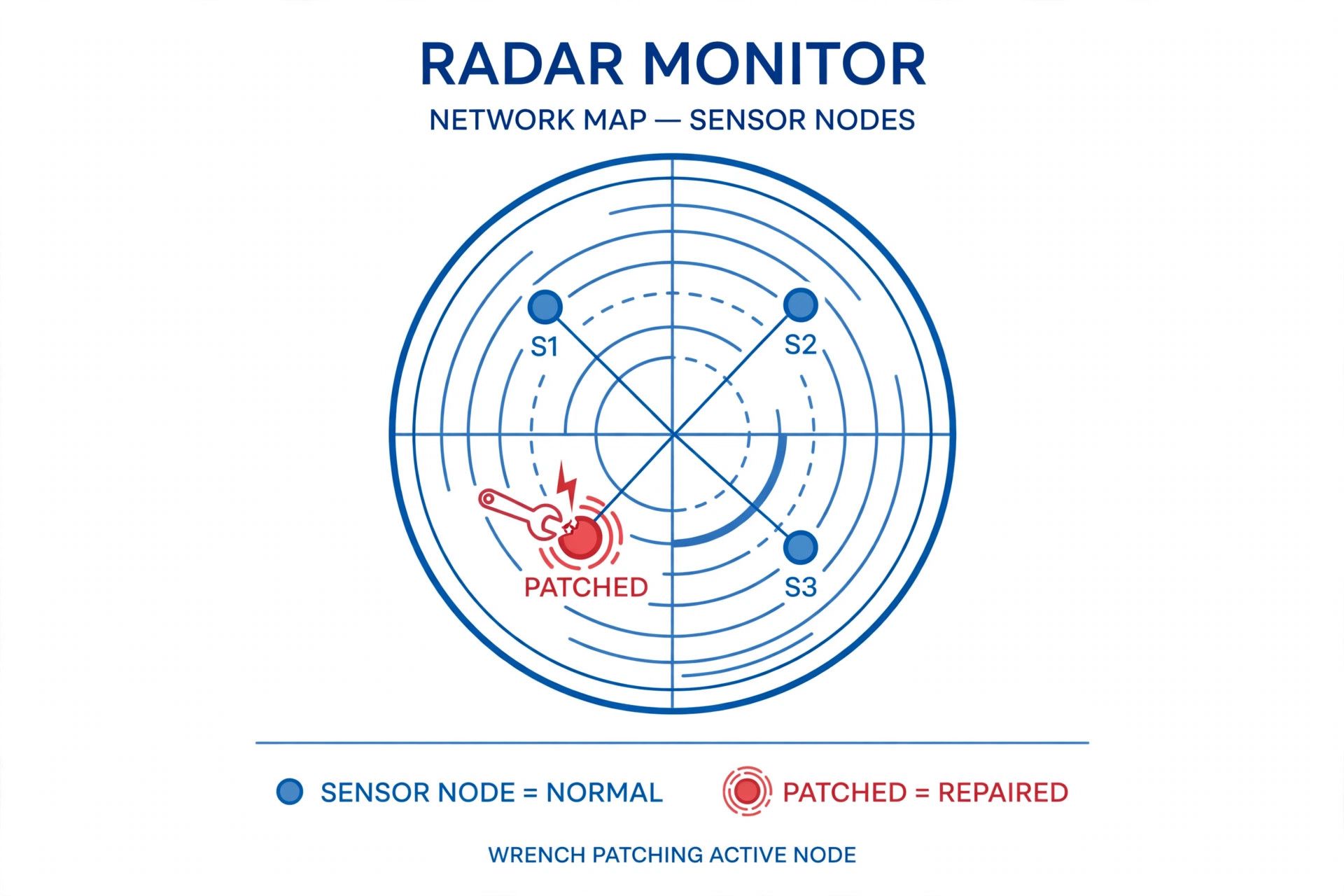
Continuous monitoring is the heart of a live ATO. ATO means authorization to operate. The promise is simple. Sensors watch the system, and the authorizing official sees the truth.
This week that promise got tested. The sensor was the target.
What happened
On October 20, 2026, Horizon3.ai published a working exploit for CVE-2026-106173. The flaw sits in the FortiSIEM phQueryMaster gRPC service. A SIEM is a security information and event management system. The service listens on TCP port 27918 and skips client certificates.
An attacker with no login can reach it and write files anywhere on the appliance. File write becomes code execution. Fortinet rates it 9.4. Several vulnerability databases list 9.8.
Fortinet's advisory FG-IR-26-180 shipped October 13, 2026. FortiSIEM 7.5.0 is affected. The fix is 7.5.1 or later. FortiSIEM Cloud is not affected.
Why this breaks the monitoring promise
NIST SP 800-53 control SI-4 is information system monitoring. The ATO package points to the SIEM as the tool that performs it. Every continuous monitoring report assumes the tool is honest.
An attacker with code execution on the SIEM can disable detection rules. They can alter stored logs. They can read the credentials the SIEM holds for monitored systems. The reports keep flowing. The truth inside them does not.
Horizon3.ai found no clear log line for this attack. A compromise check must go deeper than a search box. Check file timestamps by hand. Check scheduled scripts for changes you did not make.
The ATO evidence set for a tooling flaw
Your ATO records should already cover flaws in the system. This one needs four records of its own.
First, the sensor version record. It names the FortiSIEM build before and after the fix, with the date.
Second, the exposure record. It shows whether port 27918 was reachable from outside the management network, and when you restricted it.
Third, the compromise check. Date it, sign it, and keep the file listing you checked.
Fourth, the monitoring gap note. If the SIEM was exposed during your monitoring window, say so in the package. A gap the authorizing official knows about is a finding. A gap nobody mentions is a failure.
What to do this week
List every tool your continuous monitoring depends on. SIEM, log collectors, scanners, and agents. Each one runs software. Each one needs its own patch record.
Add the tooling layer to your monitoring review cadence. The package describes what watches the system. This month asks who watches the watchers.
Sources
- FG-IR-26-180: FortiSIEM path traversal vulnerability, Fortinet Product Security, October 13, 2026. https://www.fortiguard.com/psirt/FG-IR-26-180
- CVE-2026-106173 record, CVE Program. https://www.cve.org/CVERecord?id=CVE-2026-106173
- FortiSIEM CVE-2026-106173 technical analysis and proof of concept, Horizon3.ai, October 20, 2026.
- Original diagram by PolicyCortex.
Next step
Want control evidence that pulls itself from your live systems? See how PolicyCortex collects it on Azure.